핵심 요약
- 50대 이후 치아는 균열과 잇몸 마모에 취약해 조기 대처가 중요합니다.
- 딱딱한 음식 섭취 시 치아 균열로 찌릿한 통증이 생길 수 있습니다.
- 좌우 칫솔질과 이갈이로 잇몸이 내려앉아 치아 뿌리가 노출됩니다.
- 균열 깊이에 따라 레진·크라운·신경치료로 치아 보존이 가능합니다.
- 통증이 반복되면 치과 검사로 치아 수명을 지키는 것이 중요합니다.
![Create a high-quality image for a blog article.
Description: 거울 앞에서 칫솔질 후 입을 헹구며 잇몸 상태를 확인하는 60대 중반 남성, 밝은 세면대 조명 아래 얇은 반팔 셔츠 차림
Style: healthy and active lifestyle photography
Requirements:
- Photorealistic or high-quality illustration
- No text overlays (if text is needed, use large bold sans-serif fonts)
- Professional quality suitable for blog content
- Visually appealing and relevant to the description
- If any Korean text appears, it must be properly composed and OCR-readable
- NO broken, distorted, or illegible characters
Additional requirements:
[STYLE] Realistic documentary / photojournalism. Natural daylight or soft indoor light, candid and authentic. Real Korean subjects, natural skin texture with visible pores, shallow depth of field with natural bokeh. No beauty filter, no studio strobes, no cinematic grading.
[SET] This is one coherent image set for a single article (body images + one thumbnail). All images share the same realistic style and serve the same topic, but each must be visibly different from the others. The thumbnail follows the same photo rules — never illustration. The people in this article must have a fresh, distinct appearance — different faces, hairstyles, and overall look from the "typical" or default person; treat each article as a new casting so its subjects do not resemble the people used in other articles.
[CASTING] Derive the person from the article body, not from a default. Read the article for who it is actually about — the person in its cases, examples, symptoms, or scenarios — and cast that person's gender, age, and situation. If the body specifies or implies a particular person (a man in his 60s, a mother of a toddler, an office worker), depict that person. If the body does not specify, choose deliberately — never fall back on a generic default face, and cast men as often as women. Within the age range the topic requires, pick a distinct individual look, such as: a lean figure with a long narrow face and sharp cheekbones; a stocky build with a broad jaw and thick brows; a round soft face with full cheeks and a gentle stoop; a tall angular frame with a high forehead and swept-back hair; a small slight build with fine features and thick glasses; a heavyset frame with a wide face and short cropped hair; a weathered sun-tanned face with deep lines; a fair smooth complexion with a low tied-back bun; a balding or thinning hairline with black-rimmed glasses; short permed curls with a warm rounded face; a square face with a strong jaw and deep-set eyes; a narrow oval face with fine straight hair and a slender neck; a broad flat face with wide-set eyes and heavy lids; a wiry frame with prominent tendons and a weathered neck; a soft double chin with a low hairline and thick black hair; a bony angular face with hollow temples and wire-rim glasses; a compact muscular build with a thick neck and close-cropped hair; a long face with a prominent nose and greying temples; a petite frame with a small pointed chin and a short bob; a broad-shouldered figure with freckles, sun-spots, and coarse wavy hair. Vary hair (cropped, parted, tied back, permed, thinning, black, dyed, salt-and-pepper, gray, white), skin tone, body build, posture, and whether they wear glasses — matching all of it to the age the topic calls for. When the topic allows, back views, over-shoulder shots, hands-only framing, or scenes without people are valid choices too.
[SUBJECT] People and real situations are always the main subject — never a product or object as the hero. Subjects are predominantly Korean (East Asian), but vary widely in individual appearance — different face shapes, features, hairstyles, and hair color (natural black, dark brown, gray, white). The scene must read at a glance (problem, consultation, treatment, or daily life). Candid gaze, naturally absorbed in the situation, not posing or staring at the camera. Realistic relatable emotion — not despairing, not overly cheerful. Subject age must strictly match the article's topic, including in the thumbnail and every background figure: for senior/elderly topics show older adults (60s–80s) as the main subjects — no young adults, no children as the focus; for pediatric show children/parents; for working-age show 30–50s. Never substitute a younger-looking person for a senior topic. Do not fix one age across different articles.
[THUMBNAIL] Thumbnail uses the exact same realistic-photo rules — never illustration. Tighter crop on one person's face/expression or a single clear situation, instantly readable in under one second. Compose with the subject slightly off-center so an uncluttered area of background (sky, wall, or plain surface) sits in the upper third — this is part of the photographed scene itself, not a graphic panel. Never draw a box, banner, bar, overlay, placeholder block, or any flat shape for a title; the image is a pure photograph edge to edge. The person's age in the thumbnail must match the article topic.
[WARDROBE] Clothing matches season and context exactly (summer = light short sleeves; winter = thick knit/padding). Ordinary age-appropriate Korean wear or real uniforms. No prints, logos, or brand tags. Across the image set, vary clothing color, style, and outfit for each person — no repeated or matching color palette between images.
[LOCATION] When the scene shows a real, named place (travel destination, landmark, or specific real location referenced by the article), it must faithfully match that place's real-world appearance — correct architecture, terrain, layout, and recognizable features. Do not invent, alter, or stylize a fictional version of a real place. If the exact real appearance cannot be reproduced accurately, use a plain, non-identifiable setting instead of a wrong depiction.
[PEOPLE] For groups or family scenes, naturally mix ages, genders, and body types for authentic representation. Medical scenes use medically plausible settings, equipment, and gestures. Any medical imaging (X-ray, scan, chart) must anatomically match the article's body part — e.g., a hand article shows a hand X-ray, never a spine or unrelated body part. If unsure, keep imaging out of frame or fully out of focus.
[TEXT CONTROL] Remove text by composition, not by faking it. Keep signs, labels, screens, and papers off-frame or far in background bokeh. Never make a blank/unlabeled white box, tube, or bottle the hero — if a product appears, keep it small and out of focus, or show the action (e.g., taking a pill) instead. No visible brand names, product labels, or promotional appearance — images must look editorial, never like an advertisement. No identifiable newspaper or magazine titles, mastheads, or covers — if a newspaper/magazine appears, show it folded, angled away, or far out of focus so no name is readable. No recognizable brand logos or product names in any framing. Electronic devices (phone, laptop, tablet, TV) must be physically correct: a glowing display only on the actual screen side; the back and edges are solid opaque casing with no screen, no glow, no image. Never put a display on the rear, back cover, or a non-screen surface. Prefer showing devices from the user's side, screen off/dark, or angled so no screen is the focus.
[ANATOMY] Natural, anatomically correct human body. Each person has exactly one head, two arms, two legs, and two hands — no extra or missing limbs. Every hand shows exactly five well-formed fingers; if a hand pose gets complex, simplify it (in pocket, on lap, loosely holding). Faces are intact and natural (back/side views allowed); never faceless or distorted. Keep limb counts and joints correct even for blurred background people.
[DIFFERENTIATION] Within the set, each image — including the thumbnail — must be clearly distinct from all others. Vary every element: different location and background, different camera angle and shot distance (wide, medium, close-up, over-shoulder, high/low angle), different gaze direction, different action, different outfit, and different stage (problem / consultation / treatment / daily life). Avoid repeating the same head-turned-sideways pose; mix front, side, back, and three-quarter views. No two images may look similar in composition, framing, or color tone.
[NEGATIVE] illustration, clipart, cartoon, vector art, flat design, infographic, 3D render, anime, drawing, painting, text, letters, hangul, english text, numbers, garbled text, captions, watermarks, logos, brands, brand names, product labels, advertisement look, promotional poster, white box, blank rectangle, empty banner, title placeholder, overlay panel, solid color block, graphic bar, flat shape over photo, letterbox strip, readable newspaper title, magazine masthead, magazine cover, newspaper name, identifiable publication, recognizable brand logo, mismatched x-ray, wrong body part x-ray, spine x-ray for hand topic, anatomically inconsistent medical image, UI overlays, screen on the back of a device, display on rear of phone, screen on laptop lid exterior, double-sided screen, glowing screen on non-screen surface, display on device back cover, two screens on one device, screen on the wrong side, fictional version of a real place, inaccurate landmark, altered famous location, fake landmark, wrong architecture for a named place, distorted travel destination, blank white packaging, unlabeled product, product-centric close-up, sterile stock photo, empty white studio background, deformed hands, extra fingers, missing fingers, three fingers, six fingers, fused fingers, extra arms, three arms, extra hands, extra legs, missing limbs, duplicated limbs, mutated body, faceless, missing face, distorted face, asymmetrical eyes, crossed eyes, extra limbs, bad anatomy, disfigured, beauty filter, plastic skin, studio strobe, exaggerated smile, mismatched seasonal clothes, cloned faces, repeated location, repeated angle, duplicate scene, staring at camera, posed expression, incorrect medical equipment, implausible medical pose, similar composition, repeated pose, same outfit color, matching clothing, monotonous framing, same side-profile pose, non-Korean dominant cast, age mismatch with topic, young adults in senior topic, children in senior topic, youthful face for elderly subject, same recurring face, identical model across articles, default stock face, repetitive appearance, same person every time](https://www.tpick.co.kr/storage/g-img/2026/07/28_091656_ZBtDF6Olrs.jpg)
오징어포를 씹던 중 어금니 한쪽에서 순간 날카로운 통증이 느껴졌다면, 치아 표면에 보이지 않는 미세한 금이 생긴 신호일 수 있다. 50대 이후 치아는 오랜 저작 압력과 칫솔질 마모로 법랑질이 얇아지고 잇몸이 내려앉으면서 균열과 시림에 취약해진다. 통증을 참으며 미루다가 금이 깊어지면 신경까지 손상돼 발치로 이어질 수 있어, 조기 확인과 적기 치료가 치아 수명을 결정한다.
딱딱한 음식 씹다 생기는 미세 균열, 겉으로는 안 보여도 신경 자극
치아 균열 증후군은 치아 표면에 생긴 미세한 금이 씹는 힘에 따라 벌어지면서 내부 신경을 자극하는 상태다. 초기에는 육안으로 균열이 보이지 않고 충치도 없는 경우가 많아 방사선 사진만으로는 확인이 어렵다. 얼음, 딱딱한 사탕, 뼈, 마른 오징어처럼 단단하거나 질긴 음식을 즐겨 씹는 습관이 반복되면 법랑질에 미세 손상이 누적된다.
특히 깨물었다가 힘을 뺄 때 순간적으로 찌릿하거나, 찬 음식이나 뜨거운 음식에 시린 증상이 특정 치아에 반복된다면 균열을 의심할 필요가 있다. 자극이 사라진 뒤에도 통증이 지속되거나 같은 부위에서 증상이 되풀이되면 치과에서 저작 검사, 광선투시·확대 검사, 치면 염색 등을 통해 균열 위치와 깊이를 확인한다.
[씹을 때 반복되는 통증 신호]
- 단단한 음식 씹을 때 예리한 통증 발생
- 깨물었다 힘 뺄 때 순간 찌릿함
- 찬물·뜨거운 음식 뒤 시림 지속
- 특정 치아에서만 증상 반복
→ 통증이 사라지지 않고 반복된다면 치과 검사 권장
좌우 칫솔질과 이 악물기, 잇몸 마모로 치아 뿌리 드러나
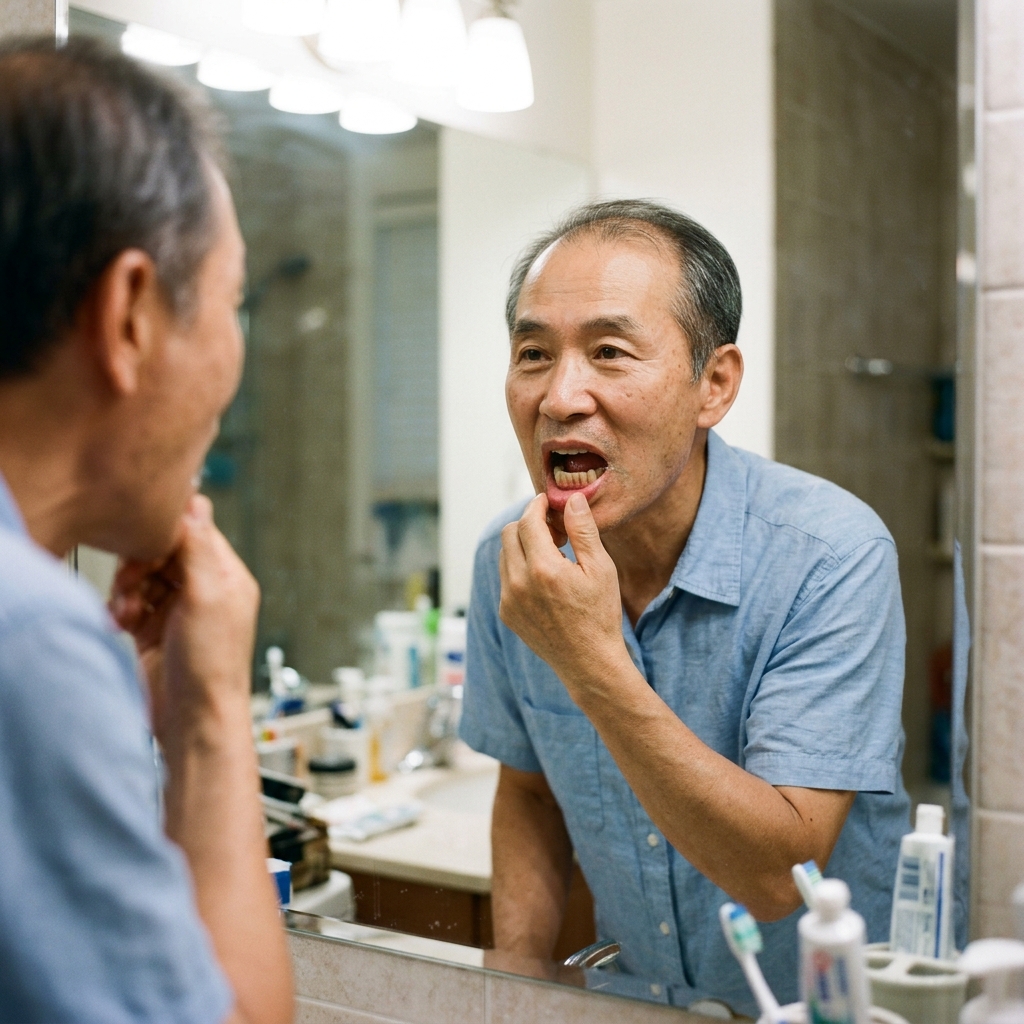
잇몸 퇴축은 잇몸이 내려가 치아 뿌리 일부가 노출되는 상태로, 치아가 길어 보이고 차거나 단 음식에 시린 증상이 나타난다. 중장년층에서 흔한 원인은 칫솔을 좌우로 세게 문지르는 습관이다. 이 방식은 잇몸 경계부를 반복 자극해 치아 목 부분에 쐐기 모양 홈을 만들고 잇몸을 점차 아래로 내려앉게 한다.
이갈이나 이 악물기 습관이 있으면 특정 부위에 집중되는 교합력이 치아와 잇몸에 부담을 준다. 치석이 쌓인 상태로 방치하면 치주질환이 진행되면서 출혈·부종·고름이 동반될 수 있다. 잇몸이 내려간 부위는 법랑질이 아닌 상아질이 노출돼 시림이 심해지고 충치 위험도 높아진다.
균열 깊이에 따라 레진·크라운·신경치료로 치아 보존
치아 균열은 깊이와 신경 침범 여부에 따라 치료가 달라진다. 얕은 균열은 레진 등으로 표면을 보호하고, 진행된 균열은 크라운으로 치아 전체를 감싸 추가 파절을 막는다. 신경까지 염증이 진행됐다면 신경치료 후 크라운을 씌우고, 치아가 깊게 쪼개져 보존이 어려우면 발치 후 임플란트나 브릿지를 고려한다.
잇몸 퇴축은 원인 제거가 우선이다. 치석 제거와 잇몸 치료로 염증을 조절하고, 칫솔질 방법을 교정한다. 칫솔은 부드러운 모를 선택하고 잇몸 경계에서 치아 끝 방향으로 쓸어내리듯 닦는다. 뿌리 노출로 시림이 심하면 불소 도포나 시린이 전용 치료를 시행하고, 결손이 크거나 심미·기능 문제가 있으면 잇몸이식 등 치주 수술을 검토한다.
[집에서 실천할 치아 보호 수칙]
- 얼음·사탕·뼈·질긴 육포 치아로 깨물지 않기
- 통증 있는 쪽 피하고 부드러운 음식 선택
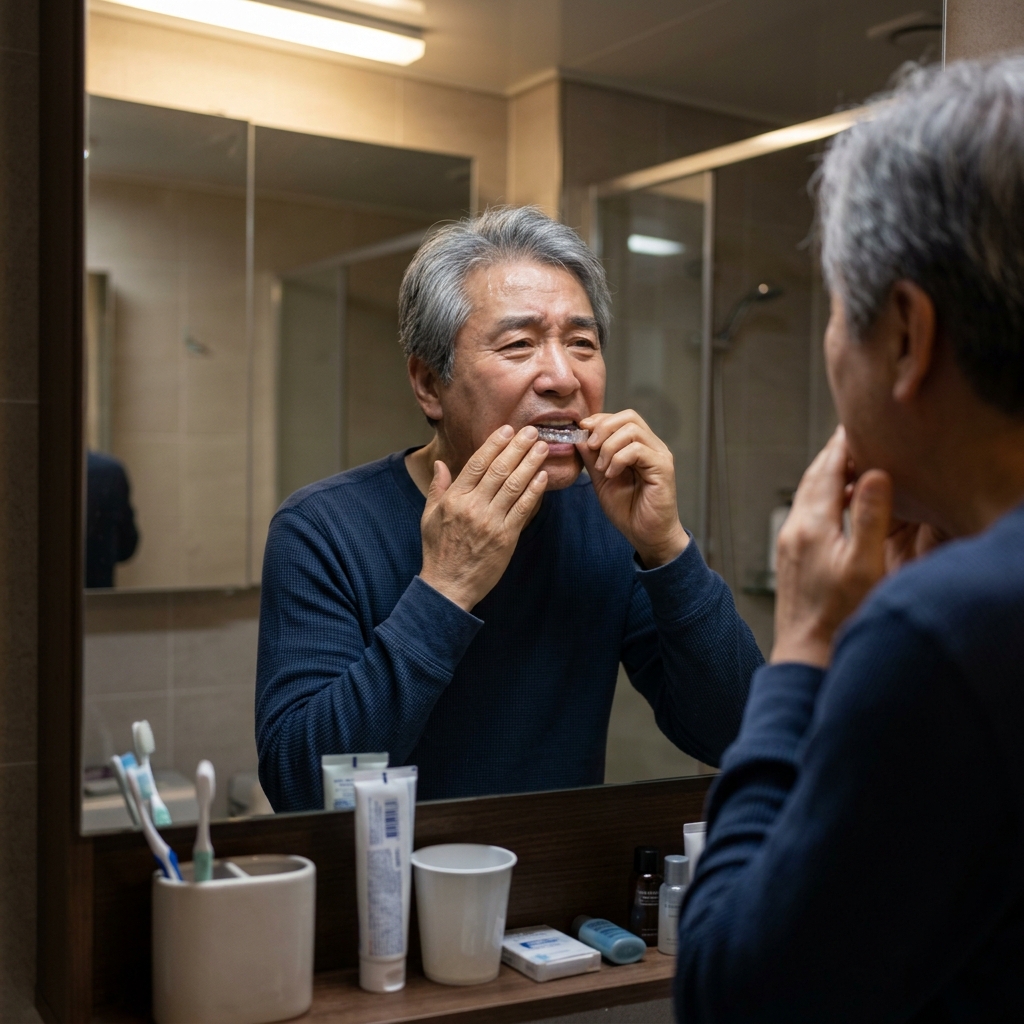
- 이갈이 있으면 치과에서 교합 상담·마우스피스 제작
- 칫솔 부드러운 모 사용, 좌우가 아닌 위아래 방향 칫솔질
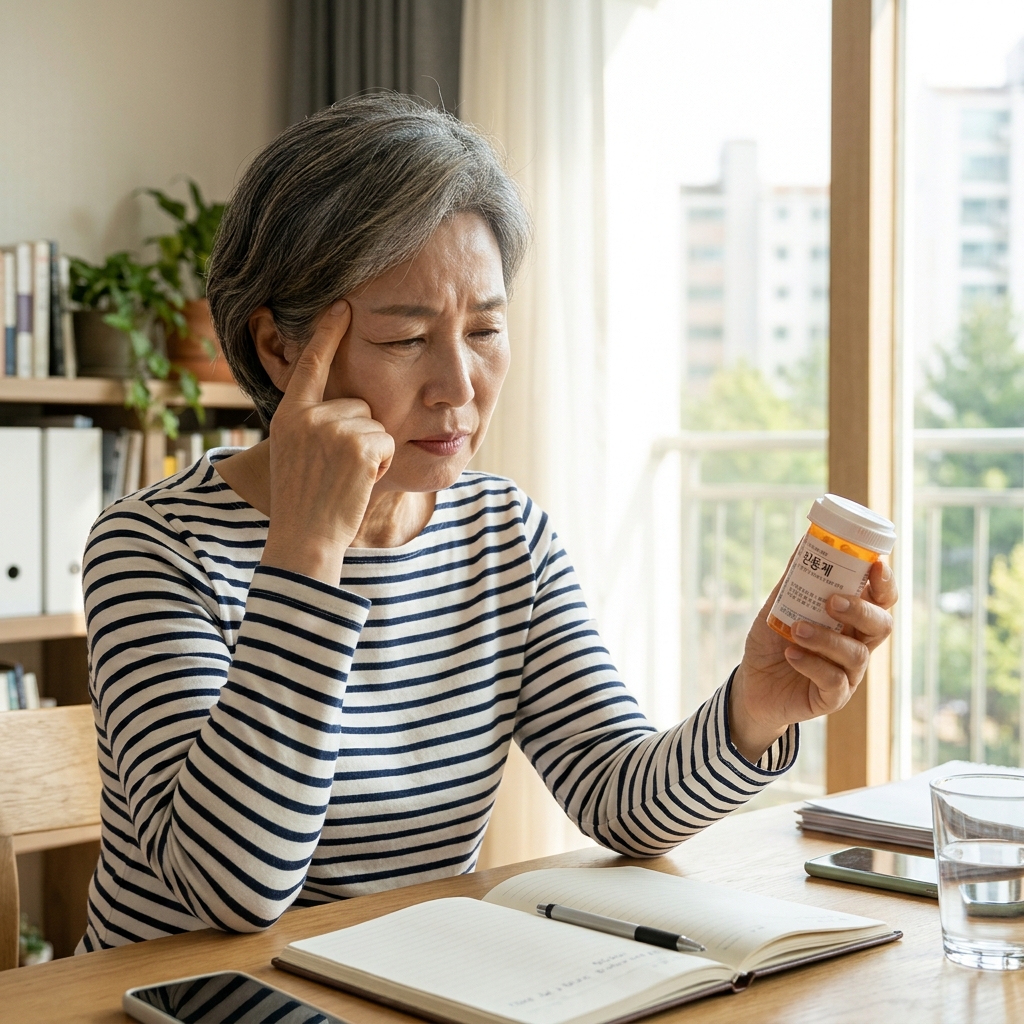
→ 진통제로 통증만 억누르지 말고 증상이 수 주간 지속 시 치과 방문
균열 방향과 깊이가 치아 수명 좌우, 조기 진단이 보존 가능성 높여
치아를 살릴 수 있는지는 균열의 방향과 깊이, 치아 뿌리까지 진행됐는지, 신경·치주조직 손상 여부에 크게 좌우된다. 씹을 때 같은 치아의 찌릿한 통증이 반복되거나 찬물·뜨거운 음식 뒤 통증이 오래 지속되면 가까운 시일 내 치과 검사를 권한다. 잇몸이 붓거나 피·고름이 나고 치아가 길어 보이며 뿌리가 노출됐다면 치주질환과 함께 균열 여부를 확인해야 한다.
반복되는 찌릿한 통증을 오래 방치하지 않는 것이 치아 보존의 첫 단계다. 딱딱한 음식을 피하고 올바른 칫솔질로 잇몸 마모를 줄이며, 이갈이·이 악물기 습관이 있다면 교합 조정과 마우스피스로 추가 손상을 막는다. 초기 균열은 크라운으로 치아를 감싸 신경치료나 발치를 막을 수 있으므로, 증상이 가벼울 때 대응하는 것이 치아 수명을 지키는 가장 확실한 방법이다.

댓글 0
아직 댓글이 없습니다. 첫 댓글을 남겨보세요!